
The Reality of Parenting When Your Knees Are 40 Years Older Than Your Child
There comes a moment in every parent’s life when they realise they are no longer the energetic, spring-loaded version of themselves they once imagined.
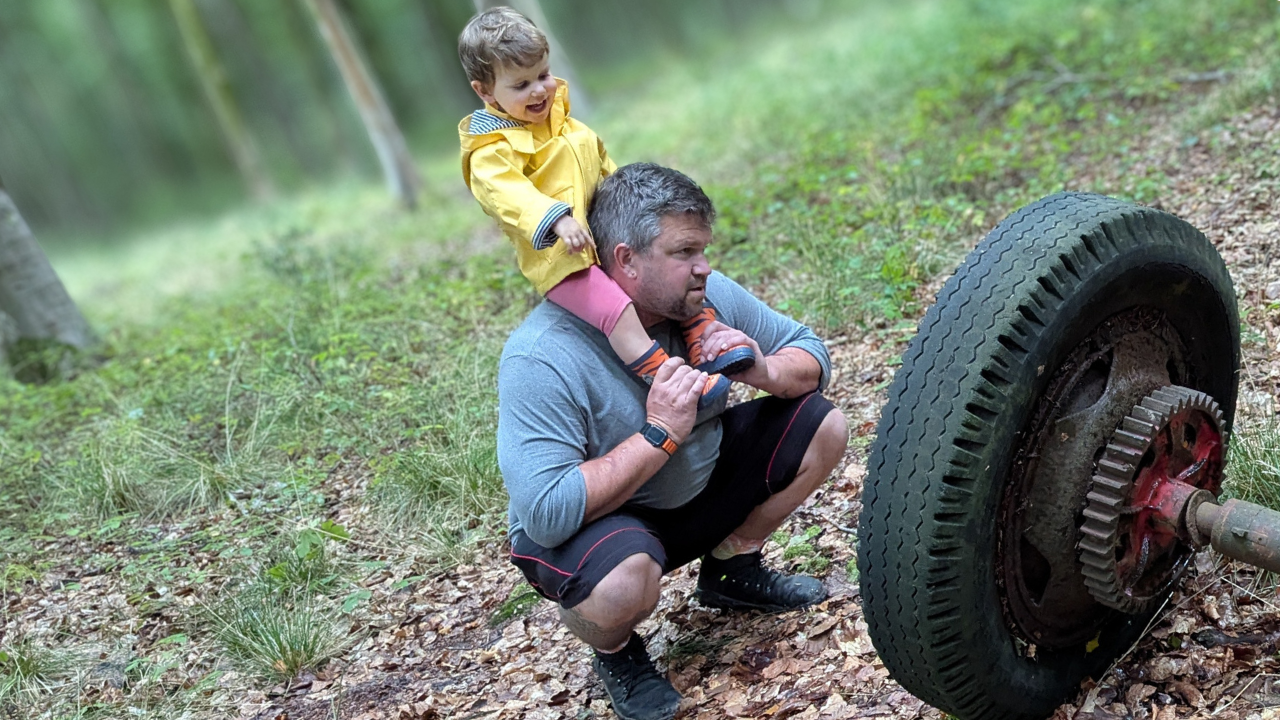
For me, that moment usually happens somewhere between getting down on the floor to play with Lily and trying to get back up again without making the noise of a grouning elephant.
Being a stay-at-home dad is genuinely one of the greatest privileges of my life. I get to see the little moments. The funny phrases. The new skills. The cuddles. The chaos. The snack negotiations. The very serious toddler conversations about why every stick on our walk is, in fact, “special”.
But there is also another side to parenting when you’re not exactly fresh out of your twenties.
The side where your child wants to play “horsies” and your knees quietly (and sometimes Loudly) resign.
The side where soft play feels less like a fun activity and more like a full-body medical assessment, with others watching and judging.
The side where you realise your toddler has the energy of a caffeinated spaniel, and you have the lower back of someone who once sneezed too hard and had to sit down.
Welcome to the reality of parenting when your knees are 40 years older than your child.
Nobody warns you about the floor
Before becoming a parent, I never thought much about the floor.
It was just there. A surface. Something to walk on. Maybe hoover occasionally if visitors were coming round.
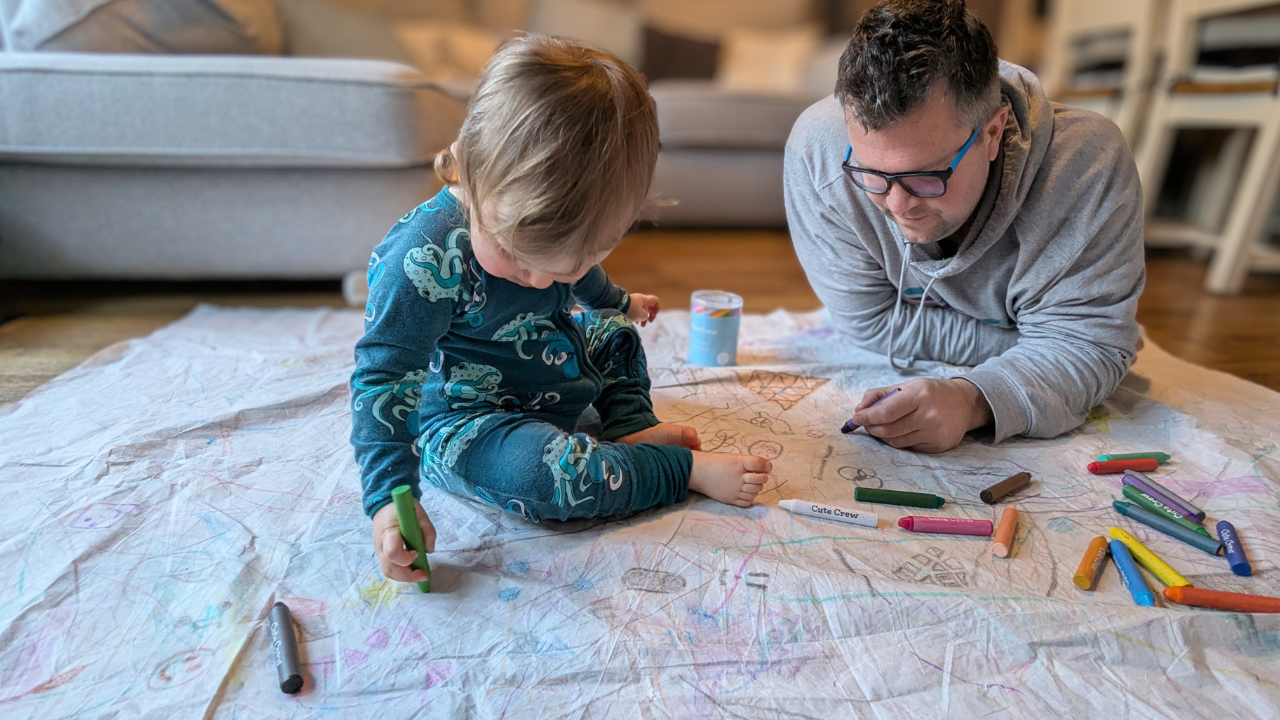
Now, as a dad, the floor is my office, my gym, my battlefield, my snack-catching zone, and occasionally my emotional support surface.
Toddlers love the floor. They build on it, roll on it, eat near it, throw things across it, and expect you to join them at a moment’s notice.
“Daddy, sit here.”
Of course. I’d love to. Just give me three to five working days to descend safely.
Getting down is one thing. Getting back up is where things become theatrical.
There is the hand-on-knee method.
The roll-to-one-side method.
The pretend-you’re-reaching-for-something method.
And, when things are particularly bad, the “use the sofa like a climbing frame” method.
Lily, of course, pops up and down like a tiny gymnast. No warm-up. No stretching. No clicking. Just pure toddler mechanics.
Meanwhile, I’m over here negotiating with my joints like a man trying to start an old lawnmower.
Soft play is not soft for adults
Soft play is a lie.
It may be soft for children, but for adults it is a brightly coloured endurance event designed by someone with no respect for tight hamstrings.
To a toddler, soft play is paradise. Slides. Ball pits. Tunnels. Obstacles. Other small people running at dangerous speeds while holding half-eaten breadsticks.
To an older dad, soft play is a place where dignity goes to die in public.
You begin with confidence.
“I’ll just follow her round, make sure she can reach stuff.”
Lovely idea.
Then, ten minutes later, you’re crawling through a tunnel built for someone the size of a Sausage dog, trying not to block the exit while three children behind you treat your ankles as part of the course.
You reach the top of the slide, realise there is no graceful way down, and just have fully commit to it anyway.
Halfway down, your jeans betray you, your back makes a new noise, and you land at the bottom with the expression of a man who has just remembered he is not 24 anymore.
And then your wide eyed smiling little cherub says, “Again, Again Daddy!”
Of course.
Again.
Because love is doing the slide twice when your body clearly requested a formal review and a call to HR.
Toddlers do not respect recovery time
One of the biggest differences between children and adults is recovery.
Children fall over, bounce, laugh, and carry on.
Adults bend slightly wrong while putting socks on and talk about it for the rest of the week, like we had barely survived the red wedding.
Parenting a toddler is not one isolated event. It is constant movement, lifting, crouching and snack opening. Constant of being used as furniture.
One minute you are making breakfast.
The next, you are carrying a child, a cup, a jumper, a toy rabbit, three random “special” stones from the garden, and a banana that has been some how opened incorrectly.
There is no “rest day” in toddler parenting, no matter how much you bend the knee.
You can have a quiet day planned, but your toddler did not attend that meeting.
They wake up with ideas. Big ideas. Park ideas. Dancing ideas. “Can you chase me?” ideas. “Can I climb on you?” ideas. “Let’s empty every toy box and then not play with anything” ideas.
And because you love them, you join in.
Even when your knees sound like someone stepping on dry pasta.
The mental load is real too
It is easy to joke about the physical side of being an older stay-at-home dad, but the mental side is big too.
Being at home with a child is not “just playing”.
It is planning, feeding, cleaning, comforting, teaching, explaining, supervising, negotiating, remembering, tidying, encouraging, and occasionally pretending you know where the tiny plastic bit from a toy kitchen has gone.
You are constantly switched on.
Is she hungry?
Is she tired?
Is that a normal cough?
Did she drink enough?
Why is it quiet?
Too quiet.
Very suspiciously quiet.
Being a stay-at-home dad can be wonderful and lonely at the same time. You can feel incredibly lucky and absolutely knackered in the same hour.
You can love the role and still need five minutes where nobody says “Daddy” directly into your kneecap.
That does not make you ungrateful. It makes you human.
Parenting later in life has its advantages
For all the jokes about joints, there are some real benefits to being an older dad.
I am calmer than I would have been years ago. Not always calm, obviously. I am still a man who has tried to put a toddler in a coat while she behaved like cooked spaghetti.
But overall, I think age gives you perspective.
You know that not every hard moment is permanent. You know that phases pass. You know that a bad morning does not mean a bad life.
You are less bothered about looking cool, which is helpful, because parenting will remove that option anyway.
You will sing in public.
You will carry a tiny backpack.
You will discuss poo with complete seriousness.
You will say things like, “Please don’t lick the trolley,” and not even be surprised by yourself.
There is a freedom in that.
Older parenting can also make you more aware of how precious it all is. You know time moves quickly. You know these moments are not guaranteed. You feel the privilege of being there, even on the days when you are tired, touched out, and covered in something sticky.
The body may complain, but the heart is full
Some days, being a stay-at-home dad feels like living inside a very loud, very cute obstacle course.
There are toys everywhere. Snacks everywhere. Questions everywhere. Laundry that seems to reproduce overnight.
But there are also moments that stop you completely.
A tiny hand reaching for yours.
A sleepy cuddle on the sofa.
A new word said proudly.
A laugh so infectious it makes the whole day lighter.
A little voice shouting, “Daddy, look!”
And you do look.
Because that is the gift of being there.
You might be tired. Your back might be stiff. Your knees might be filing a formal complaint. But you are there for the everyday magic.
Not just the big milestones. The small ones.
The ordinary ones.
The ones you might have missed if life had gone differently.
So yes, my knees are older than my child
They creak. They crack. They object to soft play. They do not enjoy sitting cross-legged. They are deeply suspicious of trampolines.
But they still get me to the park.
They still kneel beside train tracks on the living room floor.
They still carry me up the stairs for one more bedtime story.
They still chase, lift, dance, crouch, crawl, and occasionally survive a toddler climbing directly onto them without warning.
Being an older stay-at-home dad is not always easy. It can be physically harder than I expected. It can be tiring in ways I did not fully understand before becoming a parent.
But it is also brilliant.
Absolutely, properly brilliant.
Because yes, my knees may be 20 years older than my child.
But my heart?
That is currently about three years old, laughing in a ball pit, asking to go again.
Watch more of our real life on YouTube
FAQs
-
It can be. Parenting young children involves a lot of lifting, bending, carrying, crawling, and getting up from the floor. For older dads, the physical side can feel more noticeable, especially during toddler years.
-
Yes. You may need to pace yourself a bit more, but being an active stay-at-home dad is absolutely possible. It helps to build small routines, get outdoors, stay mobile, and accept that some days are more tiring than others.
-
It can be at times. Stay-at-home dads may not always see themselves represented in parent groups or online spaces, which can feel isolating. Finding other parents, getting out regularly, and sharing honest experiences can really help.
-
The best part is being present for the small everyday moments — the funny comments, new skills, cuddles, routines, and little milestones that happen when you are there day to day.
-
For many older parents, yes. It may come with more physical aches and less energy, but it can also bring more patience, perspective, gratitude, and emotional presence.
