
My Daughter Is Turning 3: What to Expect (And Why I'm Absolutely Not Ready)
She asked me for "a biscuit, please, Daddy" the other day, said it perfectly, then ran off before I'd even answered. And I just stood there in the kitchen thinking: when did that happen?
Lily is turning 3 soon, and I have no idea how we got here. It feels like five minutes ago that she was this tiny, squirmy thing I was terrified to hold, and now she's got opinions about which cup she uses and has started telling me when I've got something wrong. (Apparently I do the voices in her books "not like that, Daddy." My Gruffalo is fine. It's fine.)
If you're in the same boat, toddler hurtling towards three, wondering what to expect and also quietly panicking about how quickly it's all going then this one's for you.
Here's an honest look at what's actually happening developmentally when your toddler turns 3, alongside a few things I wish someone had told me.
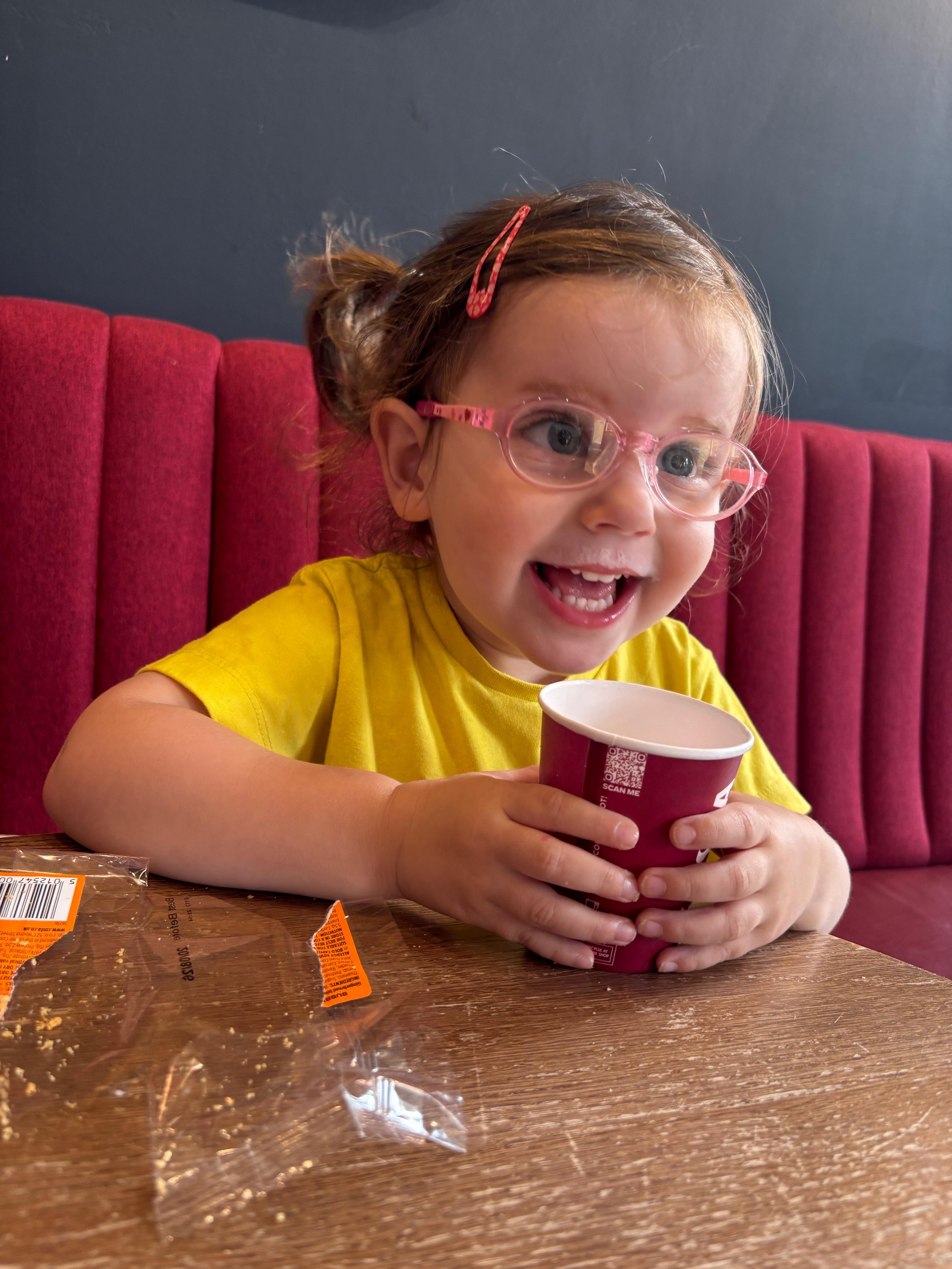
Lily is turning 3 soon, and I have no idea how we got here.
It feels like five minutes ago that she was this tiny, squirmy thing I was terrified to hold, and now she's got opinions about which cup she uses and has started telling me when I've got something wrong. (Apparently I do the voices in her books "not like that, Daddy." My Gruffalo is fine. It's fine.)
If you're in the same boat, toddler hurtling towards three, wondering what to expect and also quietly panicking about how quickly it's all going then this one's for you.
Here's an honest look at what's actually happening developmentally when your toddler turns 3, alongside a few things I wish someone had told me.
What to Expect When Your Toddler Turns 3
They're Suddenly So Much More Physical
The most obvious thing I've noticed is how physically capable Lily has become almost overnight. She's going up and down stairs properly now, alternating feet, not the one-step-at-a-time shuffle she was doing a few months back. At the playground, she's scrambling onto things that would have made her cautious six months ago. She wants to run, jump, climb, and then do it all again before I've caught my breath.
Which is brilliant. And exhausting. And requires a level of core fitness I am not convinced my forty-something knees are quite prepared for.
At three, children are becoming genuinely adventurous with their bodies. Encourage it. Let them try things on the climbing frame they weren't sure about before. Their confidence is real and it's worth celebrating.
The Talking. So Much Talking.
If you thought your toddler talked a lot before then brace yourself. By three, most children are putting together sentences of four, five, or six words, asking endless questions, and narrating their own life like they're in a nature documentary.
Lily tells me what she's doing while she's doing it. "I'm putting bunny in the box, Daddy." Yes. I can see that. I'm standing right here.
The language leap at this age is genuinely staggering when you stop and notice it. They're learning new words every day, starting to grasp the idea that words can describe feelings as well as things, and beginning to understand simple stories from start to finish. If you read together (and if you don't, now is a great time to start - it doesn't have to be long, even ten minutes before bed counts), you'll notice they start anticipating what comes next, finishing your sentences, asking why about everything.
And I mean everything.
"Why is the sky blue?"
"Why does the dog have a tail?"
"Why do you have a big head, Daddy?"
I have not answered that last one satisfactorily yet.
The Big Feelings (Welcome to the Threenager Era)
Nobody warned me that "terrible twos" was a warm-up act.
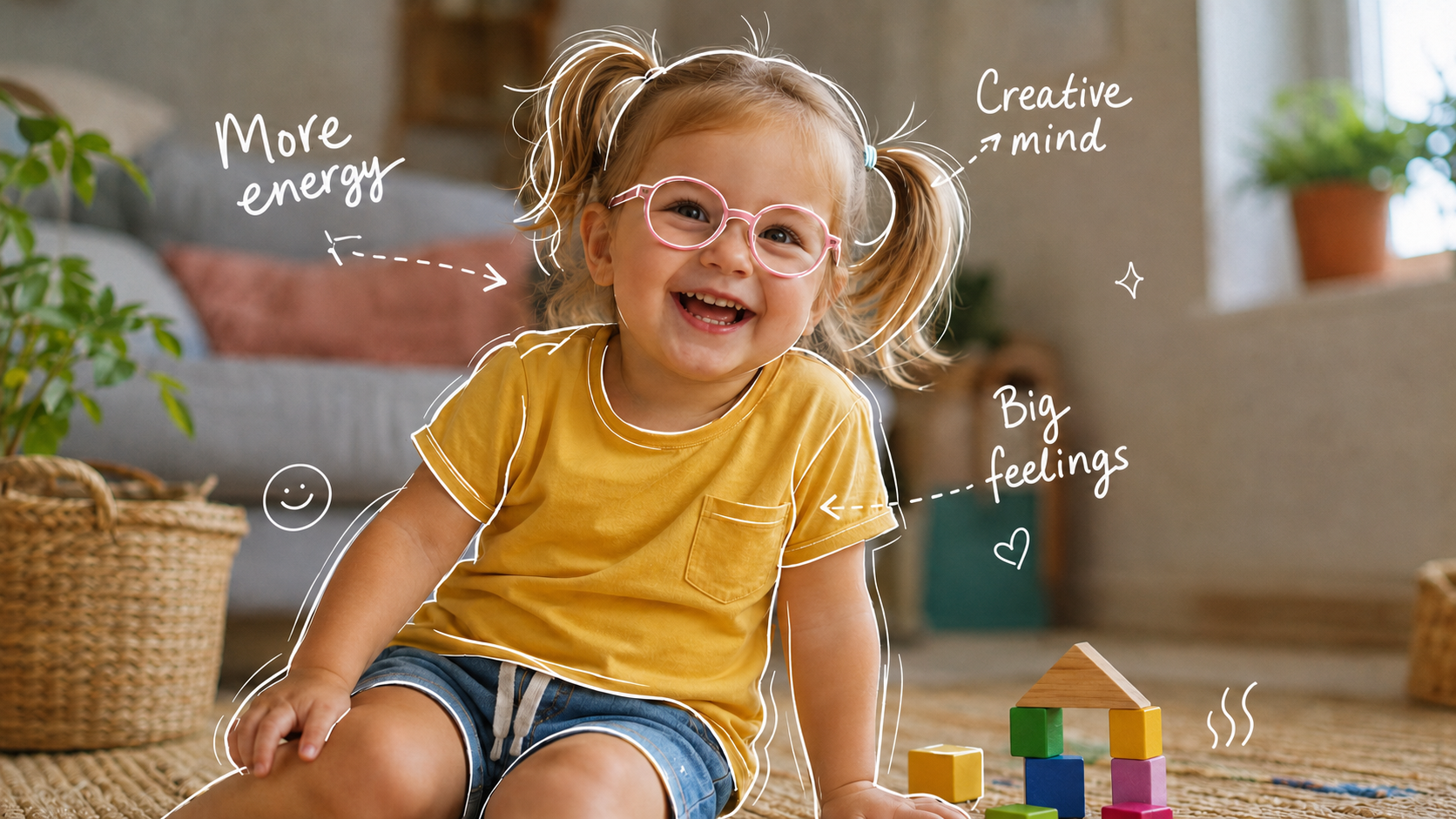
Three-year-olds are in the middle of a proper emotional storm. They have the feelings of an adult and absolutely none of the tools to manage them yet. One minute Lily is the happiest, most affectionate little person I've ever met. The next, she is inconsolable because I broke her biscuit when she explicitly wanted it not broken. (She didn't say that. There was no way for me to know that. And yet.)
This is completely normal. At three, children are developing empathy, learning to share, beginning to understand that other people have feelings too and that's genuinely complex stuff for a brain that's only been running for three years. The meltdowns aren't naughtiness. They're the sound of development happening.
A few things that have helped us: giving Lily words for what she's feeling ("you look really frustrated"), offering choices when she's digging in ("do you want to put your shoes on first or your coat?"), and sometimes just sitting with her when it all kicks off, rather than trying to fix it immediately. Sometimes they just need to feel it.
Imagination is Absolutely Exploding
If you haven't met your toddler's imaginary friend yet, you might be about to. Around two and a half to three, lots of children invent a companion and it's not a sign of anything worrying. It's actually a brilliant sign of developing creativity, social thinking, and an emerging moral compass. Some kids use the imaginary friend to process things that have happened ("the friend did that, not me"), which is perfectly normal too.
Whether Lily has a full-time imaginary friend or not, the imaginative play at this age is a joy to watch. She sets up elaborate scenarios with her toys, narrates whole storylines, insists the teddy is having a nap and I absolutely cannot move it. Her imagination is rich and specific and a little chaotic - which, honestly, feels very on brand for a child of mine.
You can fuel this. Simple things - cardboard boxes, wooden blocks in different shapes, bits of fabric, a pot and spoon from the kitchen - fire creativity far more than any toy that does things for them. Get in there with her when you can. The games are genuinely good fun.
Friendships Are Starting to Matter
Your toddler probably had "playmates" before now, kids they spent time alongside, doing their own thing in close proximity. At three, that starts to shift. They begin to actually play with other children, to notice specific kids they like more than others, to feel something like real friendship.
This is a really lovely stage but it can also come with some harder bits. Three-year-olds are still learning to share and take turns, which means conflict is part of the deal. Try not to over-engineer their friendships. Let them figure out the small stuff. Be there for the bigger stuff.
Potty Training: We're Getting There (Apparently)
Right. This one.
We are in the middle of potty training and I will be honest with you: it is not going as I expected. Lily knows what the potty is for. She's interested in it. She'll sometimes use it perfectly and I'll feel like we've cracked it, and then we'll have a day that requires three pairs of trousers and a complete change of attitude on my part.
The advice I keep coming back to is this: let them lead it. Children are ready for potty training at wildly different points. Some get it in days; others need weeks or months, and that is genuinely fine. Lily is not "behind." She's just doing it on her own timeline, and me being anxious or cross about accidents does nothing helpful (except make me feel like a bit of an idiot, which I then have to make up for).
A few things that have helped: keeping it low-pressure, reading a couple of books about it together (there are some great ones - Pirate Pete and Princess Polly both have potty training editions), praising the process not just the outcome, and treating accidents as absolutely no big deal whatsoever.
We will get there. Probably right before I've forgotten I was ever worried about it.
The Thing Nobody Prepares You For: School Is Coming
This is the one that got me when I really sat down to think about it.
Lily turns 3 soon, which means school — actual school — is now in the not-very-distant future. In the UK, most children start Reception the September after their fourth birthday. Which means we have, give or take, not very long at all.
I've been a full-time stay-at-home dad since before she was born. Every milestone, every first, I've been here for all of it. Her first word. Her first steps. The first time she made me laugh so hard I had to sit down. Every single day of her life so far, I've been part of it.
And one day, she's going to walk into a classroom and start a chapter that isn't mine to be in. And I already know I'm going to be absolutely rubbish about it.
I don't say this to be maudlin. I say it because if you're another parent - dad, mum, whoever's at home - who's feeling that creeping feeling when they think about their toddler growing up and going to school, you're not being soft. You're paying attention. You're noticing that this time is extraordinary, even when it's hard.
Three is still small. Three is still loud cuddles and mispronounced words and falling asleep on you on the sofa. Three is now, and now is brilliant.
So: What to Expect When Your Toddler Turns 3?
Here's the honest summary, from one parent in the thick of it to another:
Expect more. More words, more feelings, more physical confidence, more personality, more fun, more chaos, and more of those moments where you just look at them and think: how are you this brilliant?
Expect the hard bits. Potty training that takes longer than you'd like. Meltdowns that make no logical sense. A level of stubbornness that is genuinely impressive.
Expect to be surprised. By what they say. By what they remember. By who they're becoming.
And expect to feel a bit of everything. Pride and exhaustion and joy and the occasional totally irrational sadness that they're not a baby anymore - all at the same time.
It's a wild age. It's a brilliant age.
Lily is nearly three. And I wouldn't swap a single noisy, potty-training, question-asking, biscuit-breaking second of it.
If you're going through the three-year-old stage right now and want more honest (and occasionally chaotic) content from a stay-at-home dad who's very much figuring it out - subscribe to the newsletter or come and find me over on YouTube.
