
A research backed, Stay-at-Home Dad schedule for toddlers.
I've spent more than a decade working with vehicles. Give me an engine making a strange noise and I've got a reasonable chance of working out what's wrong.
The inner workings of a toddler remain considerably more mysterious and there isn’t a guidebook.
Three years into being a stay-at-home dad, I've learnt that toddlers don't necessarily care about your carefully considered plans. You can provide food, sleep, entertainment and the correct coloured cup and still discover that you've committed some previously unknown crime against humanity.
So this isn't going to be one of those perfect stay-at-home dad schedules where every fifteen minutes is accounted for. So if you’re okay with that, please read on…
Our days have structure. But they also have puddles, tantrums, snacks, inexplicable delays leaving the house and occasionally watching the same episode of Hey Duggee more times than any adult should reasonably have to endure.
What we've found works is having a rhythm rather than a rigid timetable.
Our stay-at-home dad toddler schedule (for dads & mums!)
A normal day looks roughly like this:
7am–8.30am: Wake up, breakfast and getting ready
We start with breakfast together, getting dressed and the usual morning jobs. It is amazing how long it can take to go from bed, to the bathroom to the kitchen table, Especially now we’ve thrown in potty training.
There are a few things in our house that are simply part of what happens. Shoes come off when we get home. We wash our hands before eating. Where possible, we sit down and eat meals together as a family.
They're tiny things, but repetition turns them into normality.
There's some science behind that too. Department for Education research and studies into the early years says routines provide consistency and security because young children begin to understand what is happening and what comes next. That doesn't mean our toddler always enthusiastically agrees with the routine.
She is three, after all.
9am–11.30am: Get out of the house
This is probably the biggest part of our routine.
Get outside.
Walk. Park. Woods. Garden. Puddles. Fields. Local loop. Whatever works. We’ll also sneak in the odd snack too.
We subscribe fairly strongly to the idea that there is no bad weather, just bad clothing – although even I accept there are occasions when horizontal rain suggests staying indoors might be sensible for everyone involved.
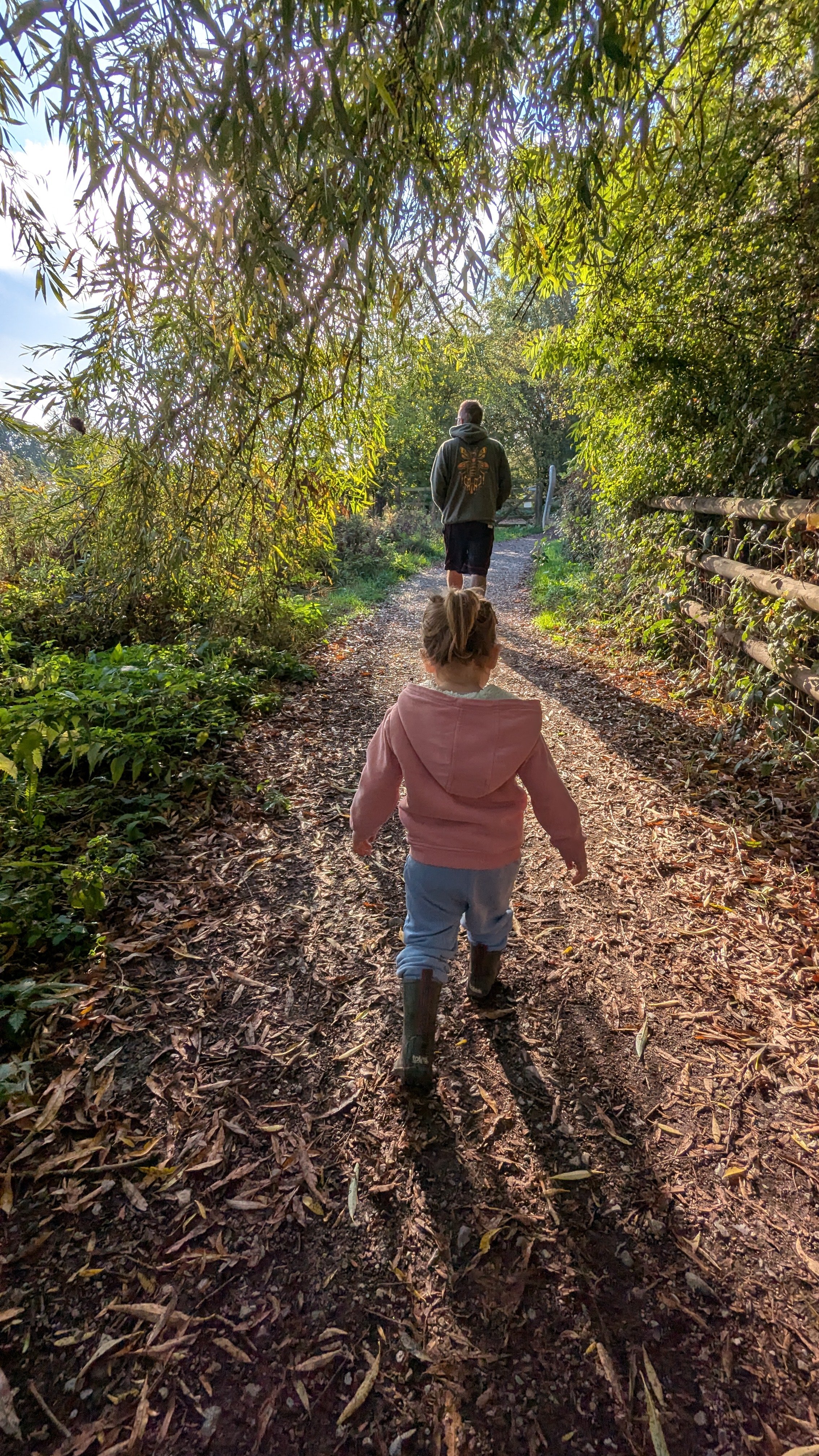
Physical activity isn't something we try to squeeze into twenty minutes of organised exercise. It's just part of the day. It is so important to get daylight and sunshine into your day and fresh air, nature and being outside does wonders for your brain and feelings. The NHS recommends that children aged three to four have at least three hours of physical activity spread throughout the day, including active and outdoor play.
Fortunately, asking a three-year-old to remain stationary for three hours would probably be considerably harder.
Getting outside gives her space to run, climb, explore, investigate sticks and spend an extraordinary amount of time examining things an adult would walk straight past. And that's part of the joy of it. What slows her down also slows me down soon. Making it a lot easier to see the world a little differently, and at a slower pace.
12pm (ish): Lunch together
Whenever we can, meals happen at the table. Not because we're attempting to recreate a 1950s family advert, but because eating together has become one of our anchors.
We sit down. We talk. We eat the same meal wherever possible. it gives us all a chance to connect with each other, talk about our day so far. If mum or nana are around, they will join us too - giving some fresh conversation.
Research into family mealtimes in young children has found associations with better-quality diets, enjoyment of food and healthier eating behaviours.
That doesn't mean every meal in our house is serene. Sometimes a carefully prepared lunch is greeted with the expression of someone who has just been presented with roadkill.
But we keep the routine.
1pm: Sleep or quiet time
As toddlers get older, naps become less predictable. What we've tried to preserve instead is quiet time.
Sometimes that means sleeping, as a nap clearly isnt on the agenda that day. Sometimes it's books. Sometimes drawing. Sometimes sitting together doing absolutely nothing particularly productive.
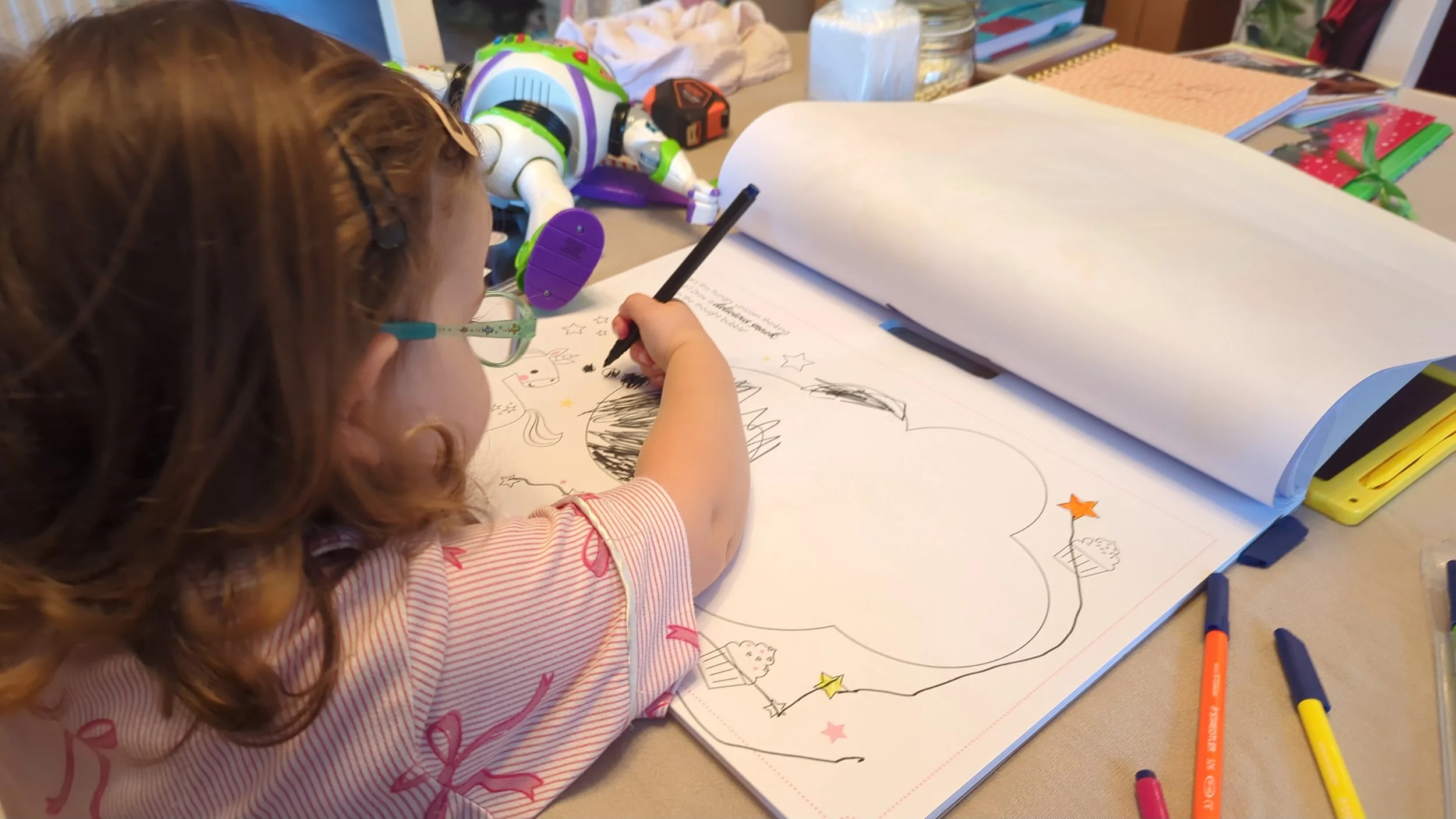
I think there's pressure on parents to constantly do things with their children - Swimming. Classes. Groups. Activities. Educational toys - but not every moment needs entertaining. In fact, children need to be bored, in order to be creative. I don’t want to take that away from Lily.
Reading together is one of the things we've done consistently. Research backs that one up too: studies of shared book reading have found benefits for children's language development.
It is also one of the rare toddler activities that involves both of us sitting down.
I'm very supportive of that (old knees you see).
3pm–4pm:Creative play and whatever the day brings
Afternoons are looser.
Drawing, painting, Play-Doh, puzzles, pretend play, helping with jobs around the house or another trip outside.
We're not trying to recreate nursery at home.
If she wants to spend forty minutes drawing circles and explaining that they're all different members of the family, that's fine. I am a firm lover of the new potato people fmaily members she has created so well.
Drawing, painting, cutting and manipulating materials all help children develop the small hand movements and coordination they'll eventually need for things like writing.
But she doesn't know that.
She's just making a picture.
And I think that's how it should be.
4pm onwards: Home, dinner and slowing down
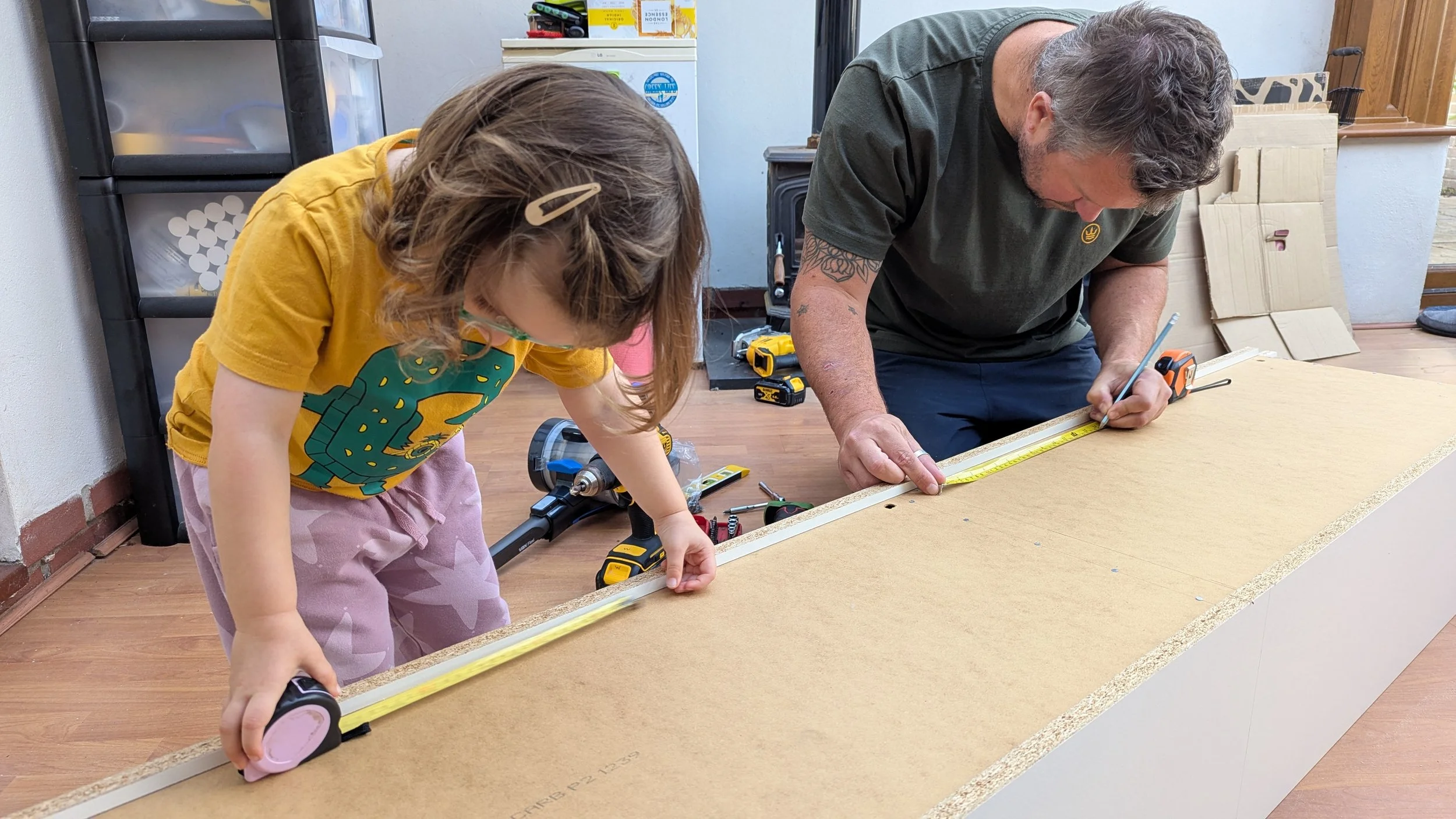
Later in the afternoon things naturally begin to calm down. Dinner preparation is another opportunity for her to join in rather than Dad disappearing into the kitchen while she waits to be entertained. She can help with washing, some simple cutting or mixing. Or if shes not in the mood, we tend to have the radio on and she’ll enjoy a dance in the kitchen.
Then we eat together as a familt and gradually move towards the bedtime routine.
Again, the exact times change, life is busy and interesting and should be kept fun.
The order of things tends not to.
And I think that's the important bit.
Structure without scheduling every minute
The biggest thing I've learnt as a stay-at-home dad is that toddlers seem to thrive on knowing roughly what happens next, but life is considerably easier when you leave enough room for them to be toddlers. I don't think a three-year-old needs an itinerary but they need opportunities to move, time outside, books, crayons, imagination and occasionally the freedom to be bored.
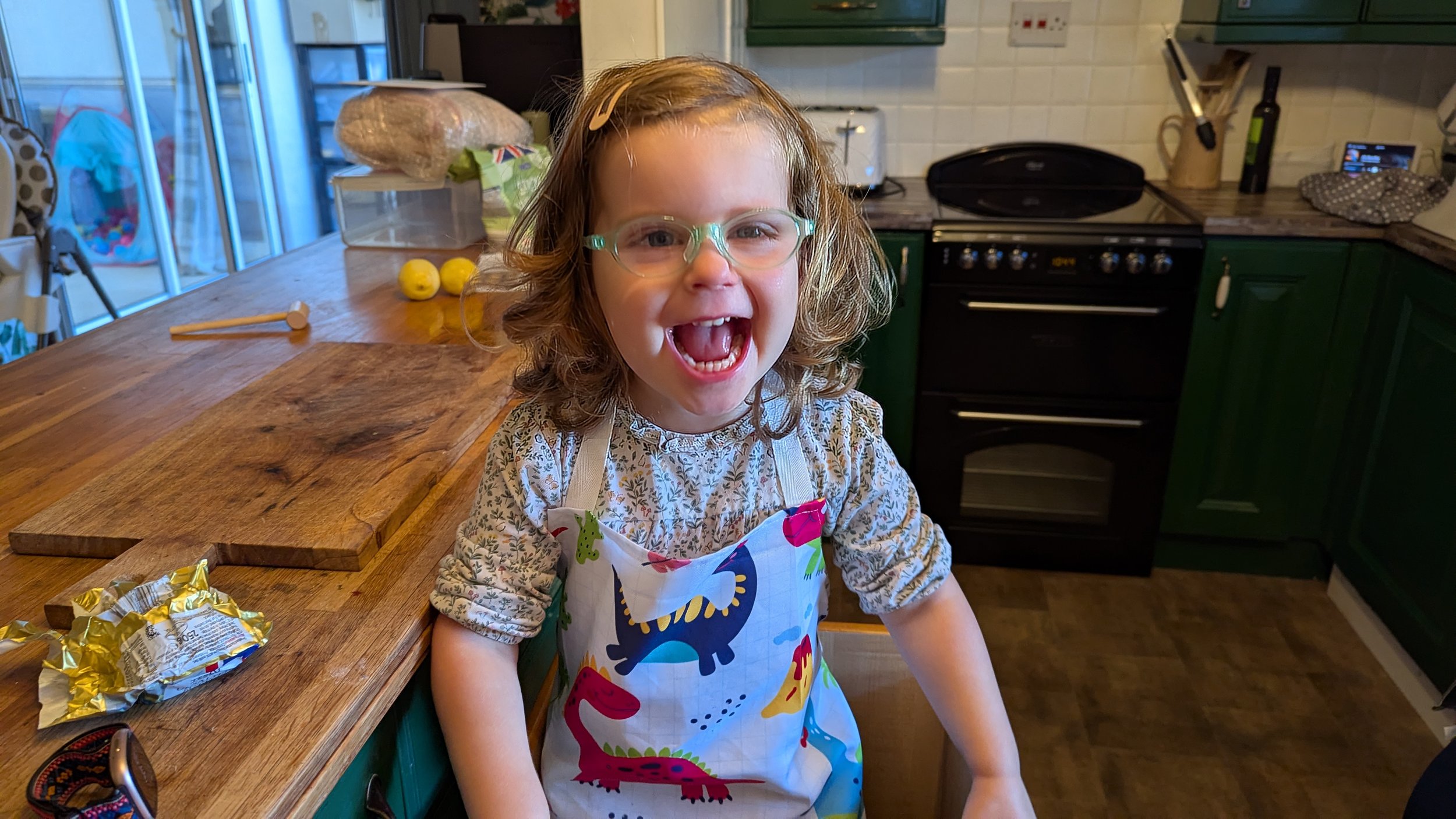
They need boundaries.
And they need enough repetition that the ordinary things – sitting together for dinner, putting shoes away, washing hands, tidying toys – gradually become just what we do.
Does our routine always work? Absolutely not.
Sometimes the lovely woodland walk ends in somebody being carried back to the car like an angry sack of potatoes.
Sometimes lunch is rejected.
Sometimes quiet time contains very little quiet.
But that's parenting.
I might understand the internal combustion engine.
Toddlers?
I'm still reading the manual.
